


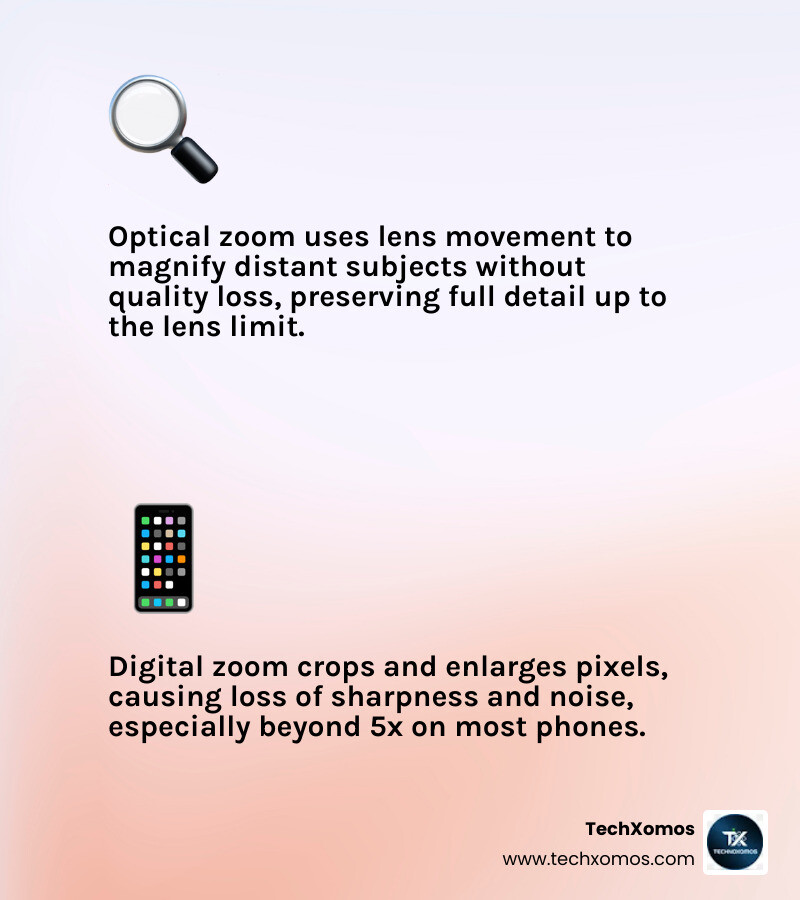
The Xiaomi 15 Ultra has a 4.3x optical zoom. The Samsung Galaxy S25 Ultra has a 10x. In real-world tests, Xiaomi won at both 10x and 30x. If that doesn't make you question everything you know about zoom specs, nothing will.
The best telephoto lens phone in 2026 is the Xiaomi 17 Ultra, followed by the Samsung Galaxy S25 Ultra and iPhone 17 Pro. Here's a quick look before we break it all down:
| Rank | Phone | Optical Zoom | Best For |
|---|---|---|---|
| 1 | Xiaomi 17 Ultra | 3.2x-4.3x continuous (200MP) | All-round zoom, portraits, low light |
| 2 | Samsung Galaxy S25 Ultra | 5x + 10x dual telephoto | Long-range versatility, sports |
| 3 | iPhone 17 Pro | 5x tetraprism | Cinematic video, everyday use |
| 4 | OPPO Find X8 Pro | 6x periscope | Detail in good lighting |
| 5 | Sony Xperia 1 VI | 85-170mm continuous | Creative control, tele-macro |
You're about to spend ₹80,000 to ₹1,30,000+ on a phone. The zoom spec on the box is probably the last thing you should trust.
I'm Saroj Yadav, a tech reviewer at TechXomos covering smartphones and AI for Indian consumers. I've tested zoom phones across every price range — and this guide gives you real trade-offs, not spec sheet comparisons.
Which Telephoto Phone Actually Wins in Real-World Tests?
The market in 2026 has split into two clear camps: phones chasing massive megapixel counts (Xiaomi) and phones focused on smart lens geometry (Apple, Sony). Both approaches work — but they work differently depending on what you're shooting.
Rankings from Beebom's telephoto camera phone list and Smartprix's price comparison show something surprising — the OnePlus 13 and Samsung Galaxy S24 Plus both score 95, matching phones that cost nearly double. You don't always need to spend ₹1.5 lakh to get great zoom. But if you want the absolute best, here's what the hardware actually needs to have.
| Feature | Importance | What to Look For |
|---|---|---|
| Sensor Size | Critical | 1/1.4" is the current gold standard for zoom. |
| Aperture | High | f/2.4 to f/2.6 allows for much better low-light zoom. |
| Optical Zoom | Medium | 5x is the "sweet spot" for most users. |
| Megapixels | Variable | 200MP allows for "lossless" digital cropping. |
Is the Xiaomi 17 Ultra Really Worth the Hype?
Yes — and I say that as someone who went in sceptical. A 200MP telephoto sensor sounds like a marketing number. Then I actually looked at the photos.
The 1/1.4" sensor inside that telephoto lens is larger than the main cameras on many mid-range phones. That's not a typo. The sensor you use for zooming in is physically bigger than what other phones use as their primary shooter.
The continuous optical zoom between 75-100mm means there's no "digital jump" between focal lengths — every millimetre is optical. For portrait and street photography, that matters more than a 10x number that drops to digital blur the moment light gets tricky. To see how far periscope tech has come, check out our comprehensive look at the Huawei P50 Pro — the contrast is striking.
When Does the Samsung Galaxy S25 Ultra Beat Everything Else?
At a cricket match. At a football game. Any time you need to shoot something far away and fast. That's Samsung's territory.
The dual-telephoto setup — one 3x lens and one 10x periscope — means you always have a dedicated optical lens for whatever distance you're shooting. No phone does extreme-distance stabilisation better right now. AI-assisted sharpening at 30x and 100x produces shots that are surprisingly legible, not the watercolour mess you get from lesser phones.
My honest complaint: in dim indoor lighting, those long telephoto lenses struggle. Smaller apertures mean less light, and Samsung's AI processing, while good, sometimes produces an overly "processed" look at night. For a direct head-to-head comparison, see our Samsung Galaxy S26 Ultra vs Google Pixel 10 Pro XL breakdown.
Why Do Video Creators Keep Choosing the iPhone 17 Pro?
Because "only 5x" is doing a lot of heavy lifting when that 5x is paired with ProRes, LOG recording, and Apple's colour science.
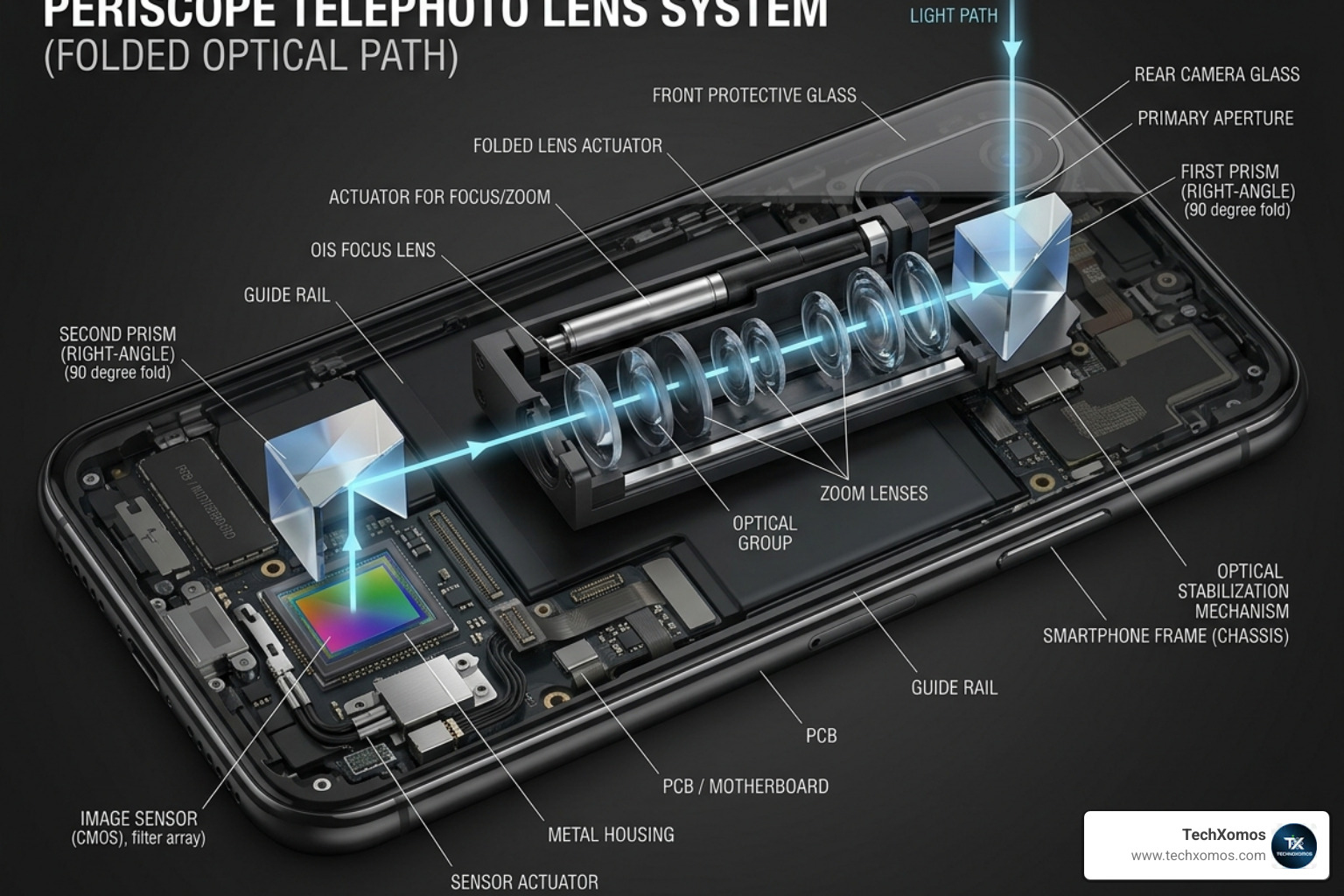
The tetraprism design — light bouncing four times inside the chassis — gives you 5x optical zoom in a phone that doesn't look like it's hiding a periscope. Recording at 4K 60fps while zoomed in and maintaining cinema-level dynamic range is something the competition still hasn't matched. For filmmakers who want to push even further, the SANDMARC Telephoto Tetraprism Lens for iPhone 17 Pro Max doubles that magnification optically.
Sony and OPPO — Who Are These Phones Actually For?
Enthusiasts who find fixed zoom steps frustrating. Both offer something the mainstream flagships don't.
The Sony Xperia 1 VI has a physically moving lens assembly — 85mm to 170mm, every millimetre purely optical. It also doubles as a tele-macro lens, letting you shoot extreme close-ups of insects from a distance without your shadow ruining the frame. That last part genuinely surprised me — I didn't expect macro quality that good from a telephoto setup.
The OPPO Find X8 Pro takes a different route: 6x periscope at f/4.3, aggressive sharpening, high-quality glass. In bright daylight it outperforms the Pixel 9 Pro XL despite the narrower aperture. A reminder that smart lens engineering beats raw specs on a sunny afternoon.
Sensor Size or AI — Which One Actually Wins?
This is the real debate in mobile photography right now. Hardware people say bigger sensors always win. Software people point at Google doing incredible things with tiny sensors. Both sides are partly right.
In testing, hardware wins for organic feel. A large sensor captures real light — the background blur is natural, the colours are true, the noise is clean. AI-driven zoom, like on the Pixel 10 Pro XL, can look "painted" at 100% crop. It gets the gist right but loses the texture.
That said, AI is essential for fighting diffraction. When light passes through a tiny aperture, it spreads — physicists call the resulting blur an "Airy disk." No amount of glass fixes that. Smart AI cleanup is what makes small-aperture telephoto lenses usable at extreme distances. The best phones in 2026 do both: premium glass to capture cleanly, and smart processing to fix what physics can't.
Can Accessories Actually Turn Your Phone Into a 240mm Lens?
Yes. And honestly, the results are better than they have any right to be.
The ShiftCam 240mm Telephoto Lens for iPhone 17 Pro mounts over your existing 5x lens and delivers 10x optical magnification without any digital cropping. You get real telephoto compression — that look where the background pulls towards the subject — which is normally only possible with proper camera lenses.
If you're serious about mobile wildlife or filmmaking, here's the kit worth building:
- The Lens: G-Series Super Telephoto 240mm for maximum optical reach without digital blur.
- The Grip: SnapGrip Super Zoom Kit by ShiftCam — physical shutter button, ergonomic handle, makes handheld long-zoom shots actually stable.
- Filters: Magnetic ND filters to cut glare in bright afternoon light — often overlooked, always worth it.
For more on how these accessories pair with the latest hardware, see our update on the latest Redmi and Xiaomi ecosystem launches.
So Which One Should You Actually Buy?
The answer depends entirely on what you shoot — not on which number sounds biggest on the spec sheet.
- Professional photographers: Xiaomi 17 Ultra. The 200MP sensor and continuous focal length give you creative control that feels closer to a mirrorless camera than a phone.
- Sports and wildlife shooters: Samsung Galaxy S25 Ultra. Dual telephoto lenses mean you always have the right focal length ready, and stabilisation at extreme zoom is the best in class.
- Video creators and vloggers: iPhone 17 Pro. Reliable, consistent zoom quality and ProRes video that no Android phone has matched for professional work.
- Budget-conscious buyers: OnePlus 13 or Motorola Edge 60 Pro. As Beebom's 2026 rankings confirm, both score 95 for telephoto quality at nearly half the price of an Ultra flagship.
Stop squinting at the horizon. Any of these phones will change how you shoot. Pick the one that matches how you actually use a camera — not the one with the biggest number on the box.
Frequently Asked Questions (FAQs)
Which phone has the best telephoto camera in 2026?
For professional photography and portraits, the Xiaomi 17 Ultra is the top choice with its 200MP continuous zoom sensor. However, for extreme long-range zoom (like wildlife or sports), the Samsung Galaxy S25 Ultra remains unbeatable with its 10x optical lens.
Is 200MP better than a 50MP telephoto lens?
Not always. While a 200MP sensor allows for high-quality digital cropping (lossless zoom), the actual physical size of the sensor and the aperture of the lens matter much more for capturing light and producing natural background blur.
Which is the best telephoto lens phone for video recording?
The iPhone 17 Pro is the best choice for video. Its 5x tetraprism lens combined with Apple's ProRes and LOG profile recording provides cinema-level dynamic range and stability that other phones struggle to match.
Can I increase my smartphone's optical zoom?
Yes! You can use premium external mobile lenses, such as the ShiftCam 240mm Telephoto accessory, to physically increase your smartphone's optical reach without relying on digital crop or AI sharpening.


.webp)

